Bergman's Winter Light functions as a drama, both as a story and as a piece of cinema. The camera is central to this 'movie', for while the dimensions of the story are important, I personally feel that the camera work in this drama functions as a mirror that reveals and withdraws from the characters the important aspects of their experiences, which is the director's main attempt. It is customary Bergman territory, a northern land, a few people, bareness and coldness of the landscape. However, central to it is the camera, that not only focuses on the main characters but does so in an unhesitant and unflinching gaze, which to the viewer's dismay, hides more than revealing. There are a few scenes, especially Ingrid Thulin's monologue, where in one single shot, the camera looks at her and she looks at us, in a scene that is enormous in its intensity, for the scene would not have the same concentrated intensity had the camera been otherwise. The drama, since it focuses on what is deemed as God's silence, God's silence towards the world, it is in the space where that silence exists that the camera acts via and on the characters.
It is not possible for this drama to seize us without the claustrophobic quality of how the camera works, for it follows the faces of the main dramatis personae, as if following the faces into the minds of these people, for the minds of the people is where the doubts are, where the silence that affects them lingers, where it festers. If the pastor of this small church, which opens the first act, has doubts regarding God's existence, and if his worshippers too suffer with the same woes, then all is lost. In essence, here the worshipper leading the flocks are all blind, surrounded as they are by this curtain of doubt. If God does not speak to an individual, personally, or if God's silence is perceived as a condition wherein one cannot function metaphysically, then this malaise is not new but an old one, the oldest one. Where worship functions is in the form of a supplication, in the form of a physical supplication, for without a physical supplication, even in the most cerebral religions, God remains distant.
It is also true that in this drama, Bergman shows the emptiness of mere rituals and critiques the rituals that dominate or by force dictate the development of a certain kind of spirituality. And by giving a rawness to the emotions of his characters, by giving them a past that is troubling and unhelpful, a certain atmosphere of doubt is created. The fisherman who doubts shoots himself, the pastor's lover who doubts bends down in the end with doubts, the pastor without faith leads the church service in the end. And Christ too had doubts we are reminded, on the cross he felt forsaken, what are we to make of that, a worshiper asks? In the end nothing is resolved, the unbelieving belief goes on, must go on. Perhaps knowing to have to live in God's silence is a gift, the ultimate test of a believer.
The austerity of the landscape, the winter setting, the closeness of the camera are signals achievements of this drama. The gaze is on the actors, as if by penetrating into their eyes, not only will their doubts come out, but also their confessions, their solitary silences, their hesitations and perhaps some resolution.
Showing posts with label Cinema. Show all posts
Showing posts with label Cinema. Show all posts
Thursday, May 26, 2011

Sunday, March 20, 2011
Susana
 Luis Bunuel's Susana is generally regarded as one of his lesser movies though I would go on to say here that he only made great movies. However, it is true that Susana is not so well known, though it has all the trademarks of the great director and perhaps raises more questions than one might think otherwise. Susana was made during the master's Mexican phase and is shot in black and White. It has some surreal tricks but on the whole it has a more straight forward narrative than one would expect in a Bunuel movie. Susana is a movie wherein Bunuel subverts the Gothic genre but also makes the movie as a kind of a morality tale. However, even on a not so close viewing, it is obvious that the director is not content in just narrating a tale but in laughing at a few widely held "male" conventions, and also certain aspects of Mexican and Catholic constructs.
Susana is shown being restrained and then thrown into a cell in a reformatory wherein this young woman soon realizes that for company she has rats and scorpions. It seems clear that Susana had escaped and has been apprehended. She is being punished. Susana, terrified, prays to God and cries his help and soon flies out of a iron window in the wall, after a cross shaped light throws a reflection on the floor. Outside, it is a virtual deluge and soon she takes refuge at a hacienda, wherein a kindly looking family give her bed and food and kindness. Susana is however not welcome to the elderly maid who sees in the rain and in Susana's appearance a bad omen, a devilish act.
Susana is blonde and beautiful and it is soon clear that she is about to create havoc in this household as all the three men, the master, his young son and ranch hand all fall for her. Susana's goes in a well planned manner to seduce all three, creating friction in the household. However, the ranch hand gets to know that she is an escapee from the nearby reformatory and blackmails her into loving her. Susana uses one against the other and eventually her identity gets revealed and she is dragged, virtually back to the reformatory. We never really get to know why she had in the first place been incarcerated there and what her crimes are though it does seem that she might somehow be mentally unbalanced.
Friday, March 11, 2011
Le Ceremonie
In Chabrol's Le Ceremonie, class consciousness pervades not only the unconscious but all visible relations. Henceforth, from the first frame, the viewers objectivity is constantly under pressure. Class distinctions pervade and invade us everywhere and possibly everyone is a victim of somebody else. That there is something amiss in all this is not a new wonder. When the domestic servant played by Bonnaire and her mentor played with menace by Huppert engage in a private war against their oppressors, hell will break loose. We must not however be trapped into thinking where our loyalties must lie. Chabrol achieves mastery in depicting the states of people's mind and warped personalities that are distinct from their class sensibilities. It is true that Sophie's employers are complacently smug but it is also true that occasionally they are kind. They are rich is a fact but that they are also alive is another fact; in deciding what is not right or passing judgement, the duo of Sophie and her mentor are acting for themselves, not on behalf of some members of their class.
Chabrol gives us a lot of clues about their flawed and dangerous personalities. In essence, the duo are lonely in their respective ways but their solidarity for each other has pathological consequences. They don't really know each other but assume so, their friendship or bonhomie is born out of darkness and need. This kinship or solidarity runs along class divides but I think, it also cements along a line that brings their fractured pasts together, and allows events to develop. I do not believe that Sophie is pushed towards the Huppert woman, who is already many steps ahead. Sophie has already crossed many frontiers in her mind. The employing rich family remain true to their own sensibilities and taste ; contrast Don Giovanni with rude mannerisms and what they see on their TV. That the ending is sinister and dark is not because there is a class war but because Sophie's person is going towards that denouement anyway.
The cultivation of style is seen by the two women as directly linked to money; whether aesthetic sensibilities are inborn or arise from cultural and educational capital is indeed the most important point here. Sophie's war is born out of a warped understanding of such things. Her vindictive nature sublimates in violence. However, the employing family and their arrogance is a reflection of their "entitlement status", and it exists amongst all classes and those who write poetry or even visit art galleries. However, this entitlement does not predispose or should not allow them to be victims of violence, for this entitlement is all that some people know. Nice clothes, beautiful houses and charming taste is ultimately all part of a social privilege that some have and either inherit or acquire from a background capital.Those who don't have it are not neccessarily those who cannot acquire it.
In Le Ceremonie, the actors playing the rich family are brilliant in their respective ways but Huppert brings malignant menace and considerable nuance to her role. Bonnaire plays the role out of her skin. Her performance is easily the best. This is such a great movie that one viewing alone leads to myriad reflections. And its aesthetic is so chilling and so Chabrolesque that one frame on, and we know mayhem is afoot.
Chabrol gives us a lot of clues about their flawed and dangerous personalities. In essence, the duo are lonely in their respective ways but their solidarity for each other has pathological consequences. They don't really know each other but assume so, their friendship or bonhomie is born out of darkness and need. This kinship or solidarity runs along class divides but I think, it also cements along a line that brings their fractured pasts together, and allows events to develop. I do not believe that Sophie is pushed towards the Huppert woman, who is already many steps ahead. Sophie has already crossed many frontiers in her mind. The employing rich family remain true to their own sensibilities and taste ; contrast Don Giovanni with rude mannerisms and what they see on their TV. That the ending is sinister and dark is not because there is a class war but because Sophie's person is going towards that denouement anyway.
The cultivation of style is seen by the two women as directly linked to money; whether aesthetic sensibilities are inborn or arise from cultural and educational capital is indeed the most important point here. Sophie's war is born out of a warped understanding of such things. Her vindictive nature sublimates in violence. However, the employing family and their arrogance is a reflection of their "entitlement status", and it exists amongst all classes and those who write poetry or even visit art galleries. However, this entitlement does not predispose or should not allow them to be victims of violence, for this entitlement is all that some people know. Nice clothes, beautiful houses and charming taste is ultimately all part of a social privilege that some have and either inherit or acquire from a background capital.Those who don't have it are not neccessarily those who cannot acquire it.
In Le Ceremonie, the actors playing the rich family are brilliant in their respective ways but Huppert brings malignant menace and considerable nuance to her role. Bonnaire plays the role out of her skin. Her performance is easily the best. This is such a great movie that one viewing alone leads to myriad reflections. And its aesthetic is so chilling and so Chabrolesque that one frame on, and we know mayhem is afoot.
Tuesday, March 08, 2011
Intentions of Murder
Sadako, the plump young and portly lower class suburban wife has certain certainties in her life that she expects but beyond these, there isn't much. Hell breaks loose when a stranger breaks into her house while she is alone. Initially, it seems that he is looking for money which he steals but Sadako resists him when she wakes. He tries to flee and threatens her with death, he has a knife. He then savagely attacks Sadako and ties her on the floor. However, seeing her naked thighs unleashes him and he rapes her. Later, Sadako decides to kill herself and while thinking these thoughts feels hungry and nibbles on left overs. An attempt to throw herself on the rail track behind her house  is half hearted.
In Sadako, the quintessential unprivileged woman decides to stay quiet. Sadako is the common law wife of a quiet librarian, who has a mistress too. He is seen sporting Eros and Civilization in his library. Later at home, he treats Sadako as a kept woman. The train track is just behind the house, it is an important motif in this movie. Sadako's son is not registered as her son, need we know any further?
In Intentions of Murder, Imamura shows both how the kept woman or a woman can be continuously subdued and subjugated. That she is raped and develops some feelings for her tormentor is quite beside the point. The state of mind which induces a person to develop sympathies for one's subjugator is indeed a complex and interesting psychological state. However, in Sadako's case, her feelings are not born of some vague romantic longing, for how often does a woman fall in love with someone who rapes her? Her escape with her rapist to Tokyo must be seen as her fight against the many betrayals that she has suffered at every step of her life, witnessed by the numerous flashbacks and reveries we see her falling into. We can make a case of Sadako as a victim of not only her circumstances but as a psychological sufferer, and her escape and trysts with the pathetic man who has raped her is her flight not to Tokyo but to those inner regions of the mind that we know nothing about, especially hers. That she leaves her hopeless life but also her son behind is a proof of how sordid her life is, better escape with this aggressor, this obvious evil man than live with her husband whose systematic violence towards her is a given part of her life. At one point in the movie, even her son calls Sadako a fatso!
Towards the end of this movie, which ends on a positive note, Sadako has gained freedom from her rapist, her husband's mistress is dead whilst spying on her ( her mission to prove to him that Sadako is unfaithful, to him who has a mistress) she has filed a case to gain legal status as a mother, and her husband, convinced that Sadako did go to Tokyo with a man, agrees in a meek manner for the status quo to remain. But the status quo has changed. Sadako has from her trauma gained a strength, and is convinced of her inner charms even if outwardly she looks unattractive. But that is neither here nor there.
Intentions of Murder is easily one of the best movies I have ever seen. Imamura is relentlessly nihilistic in corroding every perceptible value that lower bourgeoisie life uses to cover its slime and grime. It is a movie that attacks rather than shows; it is not a brave movie but a movie that subjugates the viewer in its pincer hold. The train journeys to and from Tokyo are magnificient in depicting the ennui and desperation of Sadako's life. Nothing fills you with more dread than not knowing what Sadako might do, what her rapist might not. If Sadako enjoys her rape and later shows how lusty she could be, it reflects the grime of her life, the not so genteel veil that she wears during the day. Her husband usually forces himself on her and that must not be ever considered as a paean to male victory and aggression. The flashbacks are an imporatnt part of this movie's clear and not so clear symbolism.Imamura fills more menace into this movie than you will feel in a hundred others. I am a slave to this movie, now and perhaps forever.
 is half hearted.
In Sadako, the quintessential unprivileged woman decides to stay quiet. Sadako is the common law wife of a quiet librarian, who has a mistress too. He is seen sporting Eros and Civilization in his library. Later at home, he treats Sadako as a kept woman. The train track is just behind the house, it is an important motif in this movie. Sadako's son is not registered as her son, need we know any further?
In Intentions of Murder, Imamura shows both how the kept woman or a woman can be continuously subdued and subjugated. That she is raped and develops some feelings for her tormentor is quite beside the point. The state of mind which induces a person to develop sympathies for one's subjugator is indeed a complex and interesting psychological state. However, in Sadako's case, her feelings are not born of some vague romantic longing, for how often does a woman fall in love with someone who rapes her? Her escape with her rapist to Tokyo must be seen as her fight against the many betrayals that she has suffered at every step of her life, witnessed by the numerous flashbacks and reveries we see her falling into. We can make a case of Sadako as a victim of not only her circumstances but as a psychological sufferer, and her escape and trysts with the pathetic man who has raped her is her flight not to Tokyo but to those inner regions of the mind that we know nothing about, especially hers. That she leaves her hopeless life but also her son behind is a proof of how sordid her life is, better escape with this aggressor, this obvious evil man than live with her husband whose systematic violence towards her is a given part of her life. At one point in the movie, even her son calls Sadako a fatso!
Towards the end of this movie, which ends on a positive note, Sadako has gained freedom from her rapist, her husband's mistress is dead whilst spying on her ( her mission to prove to him that Sadako is unfaithful, to him who has a mistress) she has filed a case to gain legal status as a mother, and her husband, convinced that Sadako did go to Tokyo with a man, agrees in a meek manner for the status quo to remain. But the status quo has changed. Sadako has from her trauma gained a strength, and is convinced of her inner charms even if outwardly she looks unattractive. But that is neither here nor there.
Intentions of Murder is easily one of the best movies I have ever seen. Imamura is relentlessly nihilistic in corroding every perceptible value that lower bourgeoisie life uses to cover its slime and grime. It is a movie that attacks rather than shows; it is not a brave movie but a movie that subjugates the viewer in its pincer hold. The train journeys to and from Tokyo are magnificient in depicting the ennui and desperation of Sadako's life. Nothing fills you with more dread than not knowing what Sadako might do, what her rapist might not. If Sadako enjoys her rape and later shows how lusty she could be, it reflects the grime of her life, the not so genteel veil that she wears during the day. Her husband usually forces himself on her and that must not be ever considered as a paean to male victory and aggression. The flashbacks are an imporatnt part of this movie's clear and not so clear symbolism.Imamura fills more menace into this movie than you will feel in a hundred others. I am a slave to this movie, now and perhaps forever.
Wednesday, March 02, 2011
The Unbearable Sensuality of Chabrol's Cinema
Claude Chabrol's cinema is rightly regarded as the cinema of ambiguity, to which I add that his cinema is also the cinema of style. And his muse, Stephane Audran, who was also his wife, starred in a few of his movies, called the Helene Cycle, is the goddess of style. Chabrol demands, and this is clear after you watch one of his movies, that one pays close attention to what we see, for a lot goes on in a Chabrol movie. Seemingly about serial murders as in Le Boucher or about a wife's infidelity, what Chabrol does is to peel away the surface and reveal the hypocrisies underneath. In a sense, unveiling bourgeois hypocrisy using the detective genre is achieved with mastery and class by the great film maker. Personally, I have always felt that great literature and great movies can achieve great results using the detective method and crime to allow the development and perhaps realisation of bigger themes.
As I mentioned earlier, we must watch his movies with intense attention, which is sometimes not possible. The bigger picture is in small details and it is possible that such details can be discerned on multiple viewings only. As soon as a Chabrol movie begins, we are immediately surrounded and assaulted in all of our senses by the most sensual of images and by a soundtrack that not only causes us to see but feel the atmosphere. Chabrol cinema, I am compelled to say, is the cinema of senses, a sexy cinema. The most mundane detail and the most trivial event is filmed with great aesthetic charm, conveying the feeling sometimes that style is more important than substance. Any unpleasant thing to be done must be got over with quickly, it seems. Consider the murder in Le Biches, where Frederique is stabbed by Why. It is done in a charming manner, as if Frederique is willing to be murdered, as if excessive force and excess of blood would revolt the sensibilities of the murdered and the murderer.
Sometimes watching his movies becomes unbearable. To a great extent, this must relate to the relation his characters have with their surroundings and the surroundings to the viewer. There is a mathematical precision to the images, so that every single move has not just been carefully rehearsed but that each move has a philosophy behind it. The unbearable sensuality is actually quite intellectual. By that I mean that the imagery has a purpose and is not just random. What is described as a thriller in relation to his movies or as suspense is a very intellectual one indeed. By suspense, if the actor doesn't know and we know is not the same as if both don't know. And anyway, the concerns of his thrill are far more ramified than any wife sleeping behind her husband's back.
I want to specifically, at this stage of my Chabrol acquaintanceship, mention the Helene Cycle. Played by Stephane Audren with Helene as her character's name in a few of these movies, she not only symbolises this extremely unbearable sensuality, she takes it a few steps further so that this charm that she radiates, this erotic and sensuous mystery that she creates, takes her and situates her in a place where she becomes remote and simultaneously extremely mystifying. The Helene cycle cannot be imagined without Audran. Her looks apart, she comes across as very accomplished and intelligent as an actor who is able to project the persona of her character on to her and vice versa. In Le Boucher, when the head mistress walks with Popaul to her school, cigarette dangling from her lips, in a wonderful one take six minute shot, she appears as if she is walking on a Paris street or on a catwalk. She is able to endow the most mundane character with the most electrifying charm.
I was very impressed with Le Femme Infidele, for what is a husband suppos ed to do when his wife is having an affair? Ordinarily, all sorts of usual things happen but here, the bourgeois crust is left untouched as the husband confronts his wife's lover at his home and then accidentally kills him. Such things are however not whispered at home and life must inevitably move on till other conclusions are reached. In Le Boucher, when an ex-army man starts killing women in a quaint village, the teacher to whom he has started an attachment with, and who refuses that, after suspecting this man refuses to tell the police about her suspicions till the end, which is dramatic.
In Les Biches, there is a menage a trois, and a very subtle reconfiguration of relationships. There is the emphasis on class distinctions and hypocrisy and how people can be used in relationships but there is also the seething geometry of imagery to which I will return again. Stylistically, Le Biches is beuatiful. T he opening shot, when against the backdrop of the Seine, Audran steps into our sights, haughty and beautiful, chillingly so and later on at St Tropez, with Why and her chorus of jokers, which acts as a commentary on the action within it. I must admit that of the four Helene movies, I didn't like it the most, for sometimes the actions and movements seemed very artificial and jilted. It is possible to see this trait as a projection of the relational dialogue within the movie but on the whole, it did seeming jar at times. Why becomes Frederique after she has loved her and as both love the same person.
La Rupture follows the travails of a mother's battle to keep possession of her son against the dirty and slimy tricks of her father-in-law who employs an equally detestable character to defame her so that the court can decide against the child's custody. Audran plays a mother in torment but does it really well. Our sympathies are with her and the man hired to defame her is very slimy indeed. In the end, he gets what he deserves but the end is very psychedelic indeed. An image of a balloon peddler is chillingly unforgettable. This movie has a chorus too in the form of tarot playing ladies in the boarding house where Audran resides and their role assumes some significance in the end.
Coming back to the point of unbearability. I think while watching these movies, what strikes is the distance Audran has from the surroundings. She is mesmerizingly seductive in her own way and aloof in that seductive charm, as if what is going on around her has nothing to do with her, as if everything is a game. She is a study in detachment. It is this alienation, this estrangement from the surroundings that make the movies unbearable, for want of a better description. The rising tension rises from her, for she is never histrionic, never over-dramatic. This enhances the drama, the sinister drama of the movies more. In a way, Audran is more credible than a Hitchcockian character for the latter is usually in some kind of an inner existential or melancholic crisis. Audran's crises are far more subtle, based on instinctual relationships with others, her surroundings, and her own crazily mystifying beauty, which is a mix of seduction and intellectual beauty. The Helene Cycle is a great contribution to cinema by Chabrol, whose reputation is now more art house than it was during his life time.
As I mentioned earlier, we must watch his movies with intense attention, which is sometimes not possible. The bigger picture is in small details and it is possible that such details can be discerned on multiple viewings only. As soon as a Chabrol movie begins, we are immediately surrounded and assaulted in all of our senses by the most sensual of images and by a soundtrack that not only causes us to see but feel the atmosphere. Chabrol cinema, I am compelled to say, is the cinema of senses, a sexy cinema. The most mundane detail and the most trivial event is filmed with great aesthetic charm, conveying the feeling sometimes that style is more important than substance. Any unpleasant thing to be done must be got over with quickly, it seems. Consider the murder in Le Biches, where Frederique is stabbed by Why. It is done in a charming manner, as if Frederique is willing to be murdered, as if excessive force and excess of blood would revolt the sensibilities of the murdered and the murderer.
Sometimes watching his movies becomes unbearable. To a great extent, this must relate to the relation his characters have with their surroundings and the surroundings to the viewer. There is a mathematical precision to the images, so that every single move has not just been carefully rehearsed but that each move has a philosophy behind it. The unbearable sensuality is actually quite intellectual. By that I mean that the imagery has a purpose and is not just random. What is described as a thriller in relation to his movies or as suspense is a very intellectual one indeed. By suspense, if the actor doesn't know and we know is not the same as if both don't know. And anyway, the concerns of his thrill are far more ramified than any wife sleeping behind her husband's back.
I want to specifically, at this stage of my Chabrol acquaintanceship, mention the Helene Cycle. Played by Stephane Audren with Helene as her character's name in a few of these movies, she not only symbolises this extremely unbearable sensuality, she takes it a few steps further so that this charm that she radiates, this erotic and sensuous mystery that she creates, takes her and situates her in a place where she
 becomes remote and simultaneously extremely mystifying. The Helene cycle cannot be imagined without Audran. Her looks apart, she comes across as very accomplished and intelligent as an actor who is able to project the persona of her character on to her and vice versa. In Le Boucher, when the head mistress walks with Popaul to her school, cigarette dangling from her lips, in a wonderful one take six minute shot, she appears as if she is walking on a Paris street or on a catwalk. She is able to endow the most mundane character with the most electrifying charm.
I was very impressed with Le Femme Infidele, for what is a husband suppos
ed to do when his wife is having an affair? Ordinarily, all sorts of usual things happen but here, the bourgeois crust is left untouched as the husband confronts his wife's lover at his home and then accidentally kills him. Such things are however not whispered at home and life must inevitably move on till other conclusions are reached. In Le Boucher, when an ex-army man starts killing women in a quaint village, the teacher to whom he has started an attachment with, and who refuses that, after suspecting this man refuses to tell the police about her suspicions till the end, which is dramatic.In Les Biches, there is a menage a trois, and a very subtle reconfiguration of relationships. There is the emphasis on class distinctions and hypocrisy and how people can be used in relationships but there is also the seething geometry of imagery to which I will return again. Stylistically, Le Biches is beuatiful. T
he opening shot, when against the backdrop of the Seine, Audran steps into our sights, haughty and beautiful, chillingly so and later on at St Tropez, with Why and her chorus of jokers, which acts as a commentary on the action within it. I must admit that of the four Helene movies, I didn't like it the most, for sometimes the actions and movements seemed very artificial and jilted. It is possible to see this trait as a projection of the relational dialogue within the movie but on the whole, it did seeming jar at times. Why becomes Frederique after she has loved her and as both love the same person.La Rupture follows the travails of a mother's battle to keep possession of her son against the dirty and slimy tricks of her father-in-law who employs an equally detestable character to defame her so that the court can decide against the child's custody. Audran plays a mother in torment but does it really well. Our sympathies are with her and the man hired to defame her is very slimy indeed. In the end, he gets what he deserves but the end is very psychedelic indeed. An image of a balloon peddler is chillingly unforgettable. This movie has a chorus too in the form of tarot playing ladies in the boarding house where Audran resides and their role assumes some significance in the end.
Coming back to the point of unbearability. I think while watching these movies, what strikes is the distance Audran has from the surroundings. She is mesmerizingly seductive in her own way and aloof in that seductive charm, as if what is going on around her has nothing to do with her, as if everything is a game. She is a study in detachment. It is this alienation, this estrangement from the surroundings that make the movies unbearable, for want of a better description. The rising tension rises from her, for she is never histrionic, never over-dramatic. This enhances the drama, the sinister drama of the movies more. In a way, Audran is more credible than a Hitchcockian character for the latter is usually in some kind of an inner existential or melancholic crisis. Audran's crises are far more subtle, based on instinctual relationships with others, her surroundings, and her own crazily mystifying beauty, which is a mix of seduction and intellectual beauty. The Helene Cycle is a great contribution to cinema by Chabrol, whose reputation is now more art house than it was during his life time.
Wednesday, February 02, 2011
Innocent Sorcerers
There is one scene in Andrzej Wajda'a Innocent Sorcerers that is the movie in itself. It has everything that a cinema struck can ask for: beauty, words, imagery, poetry, timelessness, sadness, energy, pathos and high drama. It runs well near fifty minutes and takes place in the shabby apartment of a young doctor with peroxidized hair in post-war Warsaw in the early hours of one night. The young man called Basil has decided to help a friend 'tame' a charming young woman they have seen in a music bar and due to some confusion ends up with her. She, who later introduces herself as Pelagia, surprises him by accepting his invitation to his place. What follows is a marvellous scene of such intense wryness, humour, tragedy, drama and cynicism that it encapsultaes everything that can be commented in a politico-social sense about any society in transition.
Pelagia begins by teasing the man and both agree that they should proceed to engage in a sentimental plan with each other according to certain written rules, which he writes down and sticks with a knife to the wall. The rules of engagement aim at introduction, intelligent conversation, followed by a kiss, by perhaps a physical union but within degrees of freedom. If Basil thinks he is clever, Pelagia is cleverer as each aim to out do the other. In conversations that skirt on various issues, from the frailty of human knowledge to human ignorance, the two engage in verbal sparring. Basil then invites her to a game of playing with a match box and scoring on what end it falls on; they bet on taking their clothes off, one thing after the other, at each wrong call. Initially, Pelagia starts to win but later Basil wins more. During these attempts, the conversation is sparkling and flirtatious, tender and tendentious, awkward and soulful, romantic, beautiful and occasionally tense. Each is testing the other and yet each is cynical and unsure not to admit something really tender.
Later as Basil makes her scrambled eggs and later still when Basil is called out by his friends for a few minutes, on returning he finds his flat empty. Basil rushes out looking around the city for her but cannot find her at all. On returning he finds her in his flat and he appears much relieved though he does not show it. Pelagia leaves after a while but after shutting the door, stops and returns to Basil again.


I thought the long scene is a mood scene, a scene that proves time and again the revivifying nature of cinema, its poetic element, its drama. The conversation between the two is beautiful poetry and at the same time, it represents a particular mood, not only for Basil but Pelagia too. I am not sure whether Pelagia is her real name; in the climate of the country that it shows, cynicism reigns supreme. In only that sense is it political, for the city scenes show the city in ruins and yet there is a gay hedonism at work here. A certain gayness pervades the spirit of the times in which these young men and women move or work. This is evident also in the almost lazy way that Basil keeps rejecting the advances of good looking females earlier in the movie. However, in a war sapped place, perhaps there is no place for tenderness or perhaps tenderness is replaced by a boxing match, as takes place in Basil's flat.
The movie has a wonderful background jazz score, which in a sense compliments the gayness of spirit of these young men who certainly seem to have no morals. Yet, in the scene between Basil and Pelagia, and in all cinema I will list this scene very high, the talk is of love and morals. A certain tenderness is missing, a certain cynicism has set in, war has taken away something after all. Both are lonely, though to his loneliness she remarks that she is ambitious. And when he finds that she has left him, he runs frantically in a mix of dazed pain and confused regret. He may after all have found the one he was looking for, she too may have found the one she wanted inspite of her ambitions. Such sentimental plans must be tried occasionally.
Pelagia begins by teasing the man and both agree that they should proceed to engage in a sentimental plan with each other according to certain written rules, which he writes down and sticks with a knife to the wall. The rules of engagement aim at introduction, intelligent conversation, followed by a kiss, by perhaps a physical union but within degrees of freedom. If Basil thinks he is clever, Pelagia is cleverer as each aim to out do the other. In conversations that skirt on various issues, from the frailty of human knowledge to human ignorance, the two engage in verbal sparring. Basil then invites her to a game of playing with a match box and scoring on what end it falls on; they bet on taking their clothes off, one thing after the other, at each wrong call. Initially, Pelagia starts to win but later Basil wins more. During these attempts, the conversation is sparkling and flirtatious, tender and tendentious, awkward and soulful, romantic, beautiful and occasionally tense. Each is testing the other and yet each is cynical and unsure not to admit something really tender.
Later as Basil makes her scrambled eggs and later still when Basil is called out by his friends for a few minutes, on returning he finds his flat empty. Basil rushes out looking around the city for her but cannot find her at all. On returning he finds her in his flat and he appears much relieved though he does not show it. Pelagia leaves after a while but after shutting the door, stops and returns to Basil again.

I thought the long scene is a mood scene, a scene that proves time and again the revivifying nature of cinema, its poetic element, its drama. The conversation between the two is beautiful poetry and at the same time, it represents a particular mood, not only for Basil but Pelagia too. I am not sure whether Pelagia is her real name; in the climate of the country that it shows, cynicism reigns supreme. In only that sense is it political, for the city scenes show the city in ruins and yet there is a gay hedonism at work here. A certain gayness pervades the spirit of the times in which these young men and women move or work. This is evident also in the almost lazy way that Basil keeps rejecting the advances of good looking females earlier in the movie. However, in a war sapped place, perhaps there is no place for tenderness or perhaps tenderness is replaced by a boxing match, as takes place in Basil's flat.
The movie has a wonderful background jazz score, which in a sense compliments the gayness of spirit of these young men who certainly seem to have no morals. Yet, in the scene between Basil and Pelagia, and in all cinema I will list this scene very high, the talk is of love and morals. A certain tenderness is missing, a certain cynicism has set in, war has taken away something after all. Both are lonely, though to his loneliness she remarks that she is ambitious. And when he finds that she has left him, he runs frantically in a mix of dazed pain and confused regret. He may after all have found the one he was looking for, she too may have found the one she wanted inspite of her ambitions. Such sentimental plans must be tried occasionally.
Wednesday, January 26, 2011
The Green Ray

Rohmer's Le Rayon Vert situates Delphine's desire for 'understanding' in relation with her own standing in a bourgeois world where 'vacations' set the tone for knowing a person and her situation. Since loneliness can be fought by holidays in exotic locales or even at cheaper places, Delphine must not however let the world hem her in. Instead each abortive attempt at a holiday must bring her back to the starting point of such desire. What starts as a desire to negate her isolation ends up in increasing her isolation and making it more worse. Any attempts at conversation with strangers is an attempt to try; however, the outside world seeks answers that are already decided but Delphine has her own views which are outside the legitimate. The deciding tone of her outer life is set by the interactions she has with people who see the world in a narrative sequence considered normal. Delphine strives to explain to others how she sees the world and has to explain it making those explanations credible. All explanations must be bourgeois to bourgeoisie people.
Delphine struggles to articulate herself because some things have no point in being explained about. In essence, she is in isolation and lonely, but extremely sensitive to herself. This sensitivity is generally confused with stubbornness, consider the vegetarianism dialogue in the movie where she has to defend her right to be a vegetarian even if there is a hint of being teased. In this sense, not having a lover is a disability that she chooses to live with but her search is for someone credible, someone who is not simply interested in just sleeping with her. This search, like Haydee's search in The Collector, is something which the casual observer, who is hurried, has either no desire nor inclination to follow more deeply. Delphine knows the loneliness of finding herself in after what casual sleeping with people can lead to, she wants to be granted recognition as a person who is capable of being loved as well as capable of loving.
The Green Ray is a scathing indictment of a bourgeois world that usually considers difference as 'not fitting in'. As usual in Rohmer world, the action details the happenings over a month's vacation period. The chats and conversations are carried out in 'real time'. One particular chat with two strangers and the Swedish 'free' spirit is absolutely brilliant in depicting a particular kind of holiday small talk. In those few minutes, Rohmer shows the flaws of an entire generation. Maybe the green ray that Delphine sees towards the end will bring her good luck and love, for she has her quirky superstitions.
The movie is charming, the sets are around the world of cheap holidays and show cheap bargain hotel rooms, and the transition of the holidayer from a city to a beach with credibility and without artifice. The beach scenes are extremely realistic, my favourite is the exchange between the two young strangers, both men, Delphine and a Swedish girl "who knows" English. The ennui of holidays and the state of mind that prompts such desires is shown in savage nakedness.
Love is a word much misunderstood, Delphine in her youthful enthusiasm confuses it with many other things. However, sensitive that she is, she does not confuse love with 'filling the gap', she is smarter than that. Her occasional lack of humour is not her being tedious but sensitive in trying to fathom certain things. Delphine is strong-willed like other Rohmer women, she will walk alone all day if it comes to that.
Tuesday, January 11, 2011
Chloe in the Afternoon

Chloe, of Rohmer's Love in the Afternoon, is the most frank and openly speaking woman of the six moral tales. Sitting in an office will kill me she says to her lover Frederic, it is so bourgeois. Chloe wants to have what she wants to have, on her terms, in her way. Any other way would mean demeaning the whole thing. It is possible that Rohmer paints a bohemian picture of Chloe, a kind of free-spirited image of Chloe but even if that is true, she still attracts not because she shocks but because she speaks the truth to Frederic. If truth is shocking then so be it. Love or Chloe in the Afternoon is the last of the six moral tales that I have watched recently and I must admit that as a cinematic experience, it has not only been rewarding but a sexy tease too.
Frederic is visited by Chloe suddenly one afternoon in his office. Frederic is married and his wife is expecting their second child. Chloe is not an old flame but the ex-girl friend of an old friend. Chloe has returned from overseas. Chloe is looking for a job. You are not my friend says Chloe to Frederic but I like you. They start meeting each other regularly in the afternoons when Frederic, a lawyer, is free. Frederic is the quintessential narrator of Rohmer's, he likes reading novels when he goes to and from Paris to suburbia. Frederic is in a stable marriage but nonetheless he is looking for something. He imagines and daydreams once that he is wearing a magic amulet that can weaken the will power of beautiful women he sees walking around on busy Paris streets every day. They are all extensions of my wife, he thinks.
Chloe and Frederic start meeting every day nearly, going shopping or having coffee. Frederic likes talking to Chloe and Chloe is quite amused by this all. Once she disappears unannounced for a week which annoys Frederic. Later Frederic helps find her a job. Frederic insists he only loves his wife but prefers to be in Chlo's company. Frederic thinks to indulge in polygamy is barbaric but adds that he will obey the rules of society. Chloe thinks that polygamy is all right if women are also allowed the same freedom. Chloe flirts with him and he flirts with her. They kiss sometimes but he always insists that he belongs to his wife. However, later, in her tiny flat, she steps out of the shower and she asks him to dry her. He does and starts undressing himself, while she waits naked for him on her single bed but he suddenly remembers his family while taking his clothes off, an old image comes into his mind and he departs very quickly. He goes home to his wife.
Chloe wants a child with Frederic but Frederic thinks that is crazy to which she responds hence:
"It is enough to know I love you and tell you so. You know, I have a vivid imagination. I can imagine it is you when I am making love to some one else." 'You are crazy' "Crazy is pretending you love some one you live with."
Frederic dreams of falling in love with other women. At one point he asks Chloe: Can one be in love with two women at once? ( I remembered it is the same question that a dear friend asked me a long time ago) Chloe tests him initially but it is hard to say whether she loves him. She is clearly very free spirited and has bold ideas but is she really that free? Chloe sees beyond the well trodden path, she wants a meaning entirely within herself, to herself. She will not perhaps find any stability within the bounds of marriage but then as a character she is a template of a certain free spirit, perhaps of the times. She wants to become a mother, outside the marital axis. Chloe is unconventional in comparison to the conventionality of other thoughts, in comparison to how others think.
Frederic is carried away by passion but it is also fair to say that he likes being in the company of Chloe, for after all, she is good company. The question is: Can a man and woman be friends outside a sexual binding? The scene that shakes him is the scene that reminds him of his family life. That convulsion is the same as other convulsions that Rohmer males make. That they shake themselves from the point or the brim of passion and return to more 'moral' choices is a Rohmerian imperative. In that sense, Rohmer is a conservative moralist but if one is a moralist, surely one is not always conservative? The idea of ethics and faithfulness must enter into consideration in any relationship, however trivial. That such choices are made by his males does in no way make them radical departures from the other male types that were portrayed by Rohmer's contemporaries.
Perhaps the magnitude of thinking of an artist, if worth judging at all, must be done after a few decades of his work. In that sense, Rohmer's world assumes more importance now in the present European climate. However, these works must not be seen as just outside the political framework but as part of a wholesome commentary on moral and ethical considerations. In a way, the choices that are made individually have a combined effect as well. However, it is also important to realize and understand how a particular thought is approached. And which steps in a thinking process are neglected. From that point of view, these tales are very important.
Saturday, January 08, 2011
The Killing of a Chinese Bookie

Since Cassavetes is generally regarded as outside the American mainstream, his gangster movie Chinese Bookie does really stand outside the Hollywood gangster flick . After a while, all Hollywood gangsterism becomes repulsive because these movies and the characters they show are so self immersed, as if their world is besides them. Translating that into cinematic reality makes these criminals very odd as their personalities are melo-dramatized, and all kinds of psychological baggage's are given. To that extent, Cassavetes's Vitelli too is a typical Hollywood crook who entertains, for not only does he run a striptease, his main performer there, Mr Sophistication is a talking philosophising entertainer while Vitelli himself, subdued and broken, in his monologue towards the end, talks about creating a persona, a deception that consists of watching oneself perform.
Vitelli, performed with charming finesse and restraint by Gazzara, aims to make himself comfortable with himself. He too performs what eventually Cassavetes mocks, that artificial unreality which consumes lives lived in achieving little when the means to do so have left a person. In the end his person is ambiguous and so too his fate, and perhaps that is the masterstroke of this movie. Altogether, Cassavetes achieves with method and poetry what Hollywood would not have. There is the clear influence of genre crooks and criminals, parking lots, shadows and jazz. But in narrating this story, there are realistic elements that lend credibility to the imagery, which though persistently American, has the touch of a film maker whose voice is clearly distinct, American but un-American too.
Tuesday, January 04, 2011
The Pornographers: Introduction to Anthropology
 Ogata's boat has found it's way from the backwaters of Osaka to the seas, Ogata is inside his boat, looking and marvelling at the perfect woman he has crafted, stitching each hair separately on her, each painful step a further step towards realizing his perfect woman, with whom he can sleep at will and look without fear. This is an image that persists after The Pornographers comes to an end but: before this we have been through a maelstrom of other emotions too, and Ogata whilst occasionally philosophising , didn't struck me as a poetic type. In Ogata, Imamura has created a character who alternately hovers between the caring and the unscrupulous, between the lecher and the artist that he eventually becomes. Imamura calls his movie an "introduction to anthropology" and the world he shows is messy but not one bit artificial. It is messy because it's roots are deep inside the soil of furtive and restless minds. Even to Ogata's sidekicks, the human imagination is something one can only be afraid of.
Ogata is essentially a bum, he is a man who makes 8mm pornographic movies and sells them to clients of all sorts. Ogata is also a pimp and distributor of cheap literature and as a tenant supports his landlady and her son and young daughter with whom he is clearly obsessed. The duality of his nature is a tightrope that we must walk on, Ogata is without any scruples entirely and hence full of surprises. His landlady Haru sleeps with him at will and she keeps a Carp behind her bed in a tank, the carp is the reincarnation of her dead husband. Every time she does something bad, she says, the carp jumps, which is practically throughout the movie. In Haru, Imamura shows the social dynamic of a kept woman, it is usually the man who keeps the woman, he pays for her bum son and her daughter's studies.
The social realities which force such power changes are very obvious. Ogata and his cohorts are caught between the mafia and the law and hence his procrastination is quite complete throughout. It is not the lack of a reaction to such realities but a lack of self reflection that Imamura shows throughout his movies and here. Ogata has one eye on Haru and another on her daughter Keiko, he wants a child with Haru and marriage to Keiko, Ogata sees the inversion of all rules within a social reality that is seemingly out of bounds from the bigger niceties of life. Ogata philosophizes when he relaxes with his other colleagues, there Ogata desrcibes the realities of his situation carefully, he is also very aware of the human condition too.
Haru is later a victim of her own denials, screaming inside a cage, a woman hysterical and paranoid while Keiko is a willing victim of her own anger, systematically killing herself. Ogata throws the carp into a river after Haru dies, and retreats into his boat to perfect his perfect woman. Ogata has realized the 'pathos of being a man', as he sees it.
The Pornographers is a movie that fascinated me and like all of Imamura's movies, the social milieu that he has sketched is something that while seemingly reflective of a Japanese "underbelly", symbolises at least for me the invisible tentacles of our own minds. I am not willing to see the movie only as a critique of political and social realities or of a particular society nor do I think of it as a shocking indictment that shows incest and the indignities of lust; I think of these characters as inhabiting those terrains of the mind that are let loose when economic and cultural realities and the people who control and sanction them have lost the moral force to speak. Within the arc of such desires and the darkness of such minds arises the craving to create a perfect woman, an object, a commodity, a fetishism that absolves, apparently, the moral agent of any blame whatsoever.
Saturday, January 01, 2011
Imamura Shohei's "Messy Cinema"
"I am interested in the relationship of the lower part of the human body and the lower part of the social structure... I ask myself what differentiates humans from other animals. What is a human being? I look for the answer by continuing to make films." Imamura
One of the dangers after watching a few of Shohei Imamura's movies is that one can lose the taste for all other kinds of cinema altogether, and let oneself be seduced by a cinema that has reached fruition and is complete. While Imamura described his cinema as messy, it would be fair to describe it as dangerous. By messy, Imamura might have meant subversive and sarcastic or he might have meant that his movies would not follow genre conventions or the rules of Japanese aesthetics or that he would make movies about messy characters. I would say that his cinema is complete and within one movie, he shows us all the emotions that a person is capable of, including disgust, greed, lust, affection and tenderness. I will aim here to briefly discuss some aspects of his movie called Vengeance is Mine while also observing some general features.
Vengeance is Mine is based on true events that lead to the arrest of a seri al murderer and is played by the marvellous Ken Ogata. Ogata plays a disturbed and disturbing factory worker called Iwao who kills two of his colleagues in cold blood and in a gruesome, pitiless manner. There is seemingly no obvious motive for his crimes. But in classic Imamura fashion, we see his previous criminal history as a confidence trickster, a con man and a swindler and earlier still as a disaffected and rebellious young man, witness to his father's humiliation by the armed forces. Iwao is from a catholic background and the reference points to Catholicism loom large throughout the movie. Later, he lodges at an inn of low repute and befriends the lady owner of the inn. He begins a stormy but almost predictable affair with her.
The story is told in numerous flashbacks and shows how his wife and father were also erotically drawn to each other. In many ways, the general baggage of Catholicism sweeps over the movie almost completely. However, it in no way explains the senseless murders that Iwao commits. There seems to be an unpredictable edge to his behaviour, for he is extremely explosive though he is capable of occasional kindness.
I will be loath to accept any psychological explanation for Iwao's behaviour other than a deeply unsettling fascination with murder. It is more acceptable to consider the almost repulsive murders and absolutely unremorseless behaviour as just that, basically senseless. In an inversion of the title, 'vengeance is mine' would mean vengeance after life provided there is one such. However, it would be futile to consider that Imamura is telling us a tale about a serial killer. As Imamura said himself, he wants to make films that show a connection between the lower part of the body and the lower strata of society. From such a perspective, the most striking aspect is a rough rawness to his movies, depicting a world of the lower classes that is crassly and almost resolutely sexual. The numerous sex scenes that pervade his movies seem to have absolutely to do nothing with sex, for in almost all cases, there is violence associated with these acts and women are beaten into having sex. Or generally speaking, I should say that sex cannot exist other than a kind of violence that people do to each other, and this has nothing to do with class or this movie.
In the world that Iwao moves in and the people he befriends, violence is inbred within their lives as is any lack of sensitivity or decorum. It is as if decorum is the forte entirely of the middle classes. Iwao sleeps with Haru whose husband sleeps with prostitutes; Iwao's wife has incestuous moments with her father-in-law and thus the cycle seems endemic. In Imamura world, the hypocrisies and sufferings of certain weak people is a given fact, any resistance is considered as heretical. However, in what is clearly a swipe at bourgeoisie morality, the violence that is rampant is shown pitilessly. It will be total ignorance to see this without the ramifications of what the aftermath of the second war has meant for Japanese life. Imamura's cinema thus depicts a reality that is so estranged from what Ozu shows us about Japan. Ozu's 'family movies' are not unreal to say the least; it is h is studied restraint that is so different from Imamura's.
"The Japanese did not change as a result of the Pacific War—they haven’t changed in thousands of years!", said Imamura in an interview. The Japanese life that we see so often in the classic cinema of Ozu or sometimes in Mizoguchi depicts a consciousness that actually is different from the one portrayed here for here it is so unaesthetic to say the last. Imamura strikes me as anti-intellectual in his approach to films and the way his characters don't look for rationalizations to define their world. Just getting on with life is entirely what the game is all about instead of ruminating on half empty streets against beautiful backdrops with melancholic beauties pondering their way carefully through snow or rain. Consider Sadako, the portly, plump woman who makes her way home after seeing her tormentor die in a train tunnel in Intentions of Murder, the movie that is seldom calm.
In my facile way, I consider that all art must not only show political realities, at home or on the street, it should not flinch in going all the way in showing the skin under the clothes, here be it a beautiful kimono. By baring monster desires for her father-in-law, monster so long as society considers it so, Kazuko, in a scene of unbearable erotic fever, brings out all the pent up emotions of the human psyche in that hot spring where vapour and night have clothed both naked bodies. In that sense, Iwao is a true revolutionary, for his killing and his questions are truly anarchic and hence senseless. How can one justify a logical killing from an illogical killing, for after all, a murder is just that? In using the lower classes to show his vast understanding of human nature, Imamura has brought out all the anxieties of the thinking classes of not only his but the entire generations of people who have fought against outside oppression in the entire world.
A 'kept' woman like Haru or a 'common' law wife like Sadako are just waiting for another oppressor to seduce and kill them; Iwao is the simmering symptom of unknown illnesses. The beautiful flower arrangements or the mono no aware must not seduce the viewer into lulling herself or himself into thinking that there is no discontent here; the world of prostitutes and pimps and murderers is existing alongside the world of those who structure that world. That Haru asks for no explanations from Iwao and that none are forthcoming from him adds to the intrigue and the drama. Haru professes a desire to have his child and eventually he kills her like he has done before, with no apparent motive at all. Ultimately, everything is senseless, including his crimes.
One of the dangers after watching a few of Shohei Imamura's movies is that one can lose the taste for all other kinds of cinema altogether, and let oneself be seduced by a cinema that has reached fruition and is complete. While Imamura described his cinema as messy, it would be fair to describe it as dangerous. By messy, Imamura might have meant subversive and sarcastic or he might have meant that his movies would not follow genre conventions or the rules of Japanese aesthetics or that he would make movies about messy characters. I would say that his cinema is complete and within one movie, he shows us all the emotions that a person is capable of, including disgust, greed, lust, affection and tenderness. I will aim here to briefly discuss some aspects of his movie called Vengeance is Mine while also observing some general features.
Vengeance is Mine is based on true events that lead to the arrest of a seri
 al murderer and is played by the marvellous Ken Ogata. Ogata plays a disturbed and disturbing factory worker called Iwao who kills two of his colleagues in cold blood and in a gruesome, pitiless manner. There is seemingly no obvious motive for his crimes. But in classic Imamura fashion, we see his previous criminal history as a confidence trickster, a con man and a swindler and earlier still as a disaffected and rebellious young man, witness to his father's humiliation by the armed forces. Iwao is from a catholic background and the reference points to Catholicism loom large throughout the movie. Later, he lodges at an inn of low repute and befriends the lady owner of the inn. He begins a stormy but almost predictable affair with her.
The story is told in numerous flashbacks and shows how his wife and father were also erotically drawn to each other. In many ways, the general baggage of Catholicism sweeps over the movie almost completely. However, it in no way explains the senseless murders that Iwao commits. There seems to be an unpredictable edge to his behaviour, for he is extremely explosive though he is capable of occasional kindness.
I will be loath to accept any psychological explanation for Iwao's behaviour other than a deeply unsettling fascination with murder. It is more acceptable to consider the almost repulsive murders and absolutely unremorseless behaviour as just that, basically senseless. In an inversion of the title, 'vengeance is mine' would mean vengeance after life provided there is one such. However, it would be futile to consider that Imamura is telling us a tale about a serial killer. As Imamura said himself, he wants to make films that show a connection between the lower part of the body and the lower strata of society. From such a perspective, the most striking aspect is a rough rawness to his movies, depicting a world of the lower classes that is crassly and almost resolutely sexual. The numerous sex scenes that pervade his movies seem to have absolutely to do nothing with sex, for in almost all cases, there is violence associated with these acts and women are beaten into having sex. Or generally speaking, I should say that sex cannot exist other than a kind of violence that people do to each other, and this has nothing to do with class or this movie.
In the world that Iwao moves in and the people he befriends, violence is inbred within their lives as is any lack of sensitivity or decorum. It is as if decorum is the forte entirely of the middle classes. Iwao sleeps with Haru whose husband sleeps with prostitutes; Iwao's wife has incestuous moments with her father-in-law and thus the cycle seems endemic. In Imamura world, the hypocrisies and sufferings of certain weak people is a given fact, any resistance is considered as heretical. However, in what is clearly a swipe at bourgeoisie morality, the violence that is rampant is shown pitilessly. It will be total ignorance to see this without the ramifications of what the aftermath of the second war has meant for Japanese life. Imamura's cinema thus depicts a reality that is so estranged from what Ozu shows us about Japan. Ozu's 'family movies' are not unreal to say the least; it is h
 is studied restraint that is so different from Imamura's.
"The Japanese did not change as a result of the Pacific War—they haven’t changed in thousands of years!", said Imamura in an interview. The Japanese life that we see so often in the classic cinema of Ozu or sometimes in Mizoguchi depicts a consciousness that actually is different from the one portrayed here for here it is so unaesthetic to say the last. Imamura strikes me as anti-intellectual in his approach to films and the way his characters don't look for rationalizations to define their world. Just getting on with life is entirely what the game is all about instead of ruminating on half empty streets against beautiful backdrops with melancholic beauties pondering their way carefully through snow or rain. Consider Sadako, the portly, plump woman who makes her way home after seeing her tormentor die in a train tunnel in Intentions of Murder, the movie that is seldom calm.
In my facile way, I consider that all art must not only show political realities, at home or on the street, it should not flinch in going all the way in showing the skin under the clothes, here be it a beautiful kimono. By baring monster desires for her father-in-law, monster so long as society considers it so, Kazuko, in a scene of unbearable erotic fever, brings out all the pent up emotions of the human psyche in that hot spring where vapour and night have clothed both naked bodies. In that sense, Iwao is a true revolutionary, for his killing and his questions are truly anarchic and hence senseless. How can one justify a logical killing from an illogical killing, for after all, a murder is just that? In using the lower classes to show his vast understanding of human nature, Imamura has brought out all the anxieties of the thinking classes of not only his but the entire generations of people who have fought against outside oppression in the entire world.
A 'kept' woman like Haru or a 'common' law wife like Sadako are just waiting for another oppressor to seduce and kill them; Iwao is the simmering symptom of unknown illnesses. The beautiful flower arrangements or the mono no aware must not seduce the viewer into lulling herself or himself into thinking that there is no discontent here; the world of prostitutes and pimps and murderers is existing alongside the world of those who structure that world. That Haru asks for no explanations from Iwao and that none are forthcoming from him adds to the intrigue and the drama. Haru professes a desire to have his child and eventually he kills her like he has done before, with no apparent motive at all. Ultimately, everything is senseless, including his crimes.
Wednesday, December 29, 2010
Why does Oharu faint?

Oharu faints thrice in The life of Oharu, and on all occasions, wakes up feeling kinder and more forgiving. In an influential essay on this movie by Robert Cohen called "Why Does Oharu Faint? Mizoguchi’s The Life of Oharu and Patriarchal Discourse", Cohen says that Oharu's spiritual transcendence is gained after "she abandons her gender identity and sexuality", and in a sense, her victory is only pyrrhic. However, personally, I find that it goes against the standard narrative that Mizoguchi employs throughout the movie, but on the whole, I agree with what Cohen says. I think what Cohen says about abandoning her identity and sexuality is far more interesting and appealing than any spiritual excuse that could account for how Oharu has become a saintly character and her fainting spell at the beginning and in the end is more a physical and psychological surrendur to the awful life that she has lead till then.
Oharu has the kind of life that is brutal in systematically making a nonentity out of her; from a courtesan to being loved, from a woman abused to a degree of safety as a wedded woman and then eventual fall from position and grace when she is sold as a prostitute, Oharu goes through the umpteenth time what is basically a rotten life for her. There is resistance from Oharu but in that world, it can only be token. As a concubine to give the Lord Matsudaira his heir and later as a prostitute, Oharu fulfils a certain destiny that women have had to bear in all ages and in all cultures. Oharu walks a languid walk in the beginning of this movie and sitting in a temple, she visualizes her former true lover. Oharu can only fall into reverie, for only by re-living can she actualize a world that is permanently lost.
The rest of Oharu's life is a progressive narration of one injustice after another, but only through her reveries and flashbacks can Oharu gain a certain spiritual meaning. I however, do not subscribe to any notion of spiritual largess gained through physical or emotional suffering. Oharu's sufferings are neither mild nor subtle; Oharu carries on in spite of all the sufferings that she must suffer. That Oharu's experiences can be described through expressions like transcendence makes a mockery out of all her experiences.
All of Oharu's sufferings can be seen against a background of social, cultural and political realities of her times and in essence they can also be used as justifications of her sufferings. Oharu is a mother and yet not considered so, she wanted to marry for love and saw her lover beheaded and the only place that can salvage whatever is left untouched inside her is a Buddhist temple. It is in the symbolic realm of a religious sanctuary that all Oharu has lost comes back to her. All other places, be it a street or her parent's house, be it a monastery or a field have only reduced her to a person to be used or mocked at.
Oharu's fainting spells must be seen as an unknown impulse within her to resolve the conflicts that she cannot resolve practically. When she meets her lover, she faints as she is frightened of his advances and in that fainting spell, there is an element of hysteria, I think. In purely psychological terms, this behaviour, whilst hysterical, is still unknown to the actor and can have diverse causes from which it arises.
Taking again from Cohen, a de-sexualization and loss of gender will ultimately allow Oharu to devictimize herself and come to terms with her state. By mixing a certain eclectic mysticism with her subjectivity, Oharu can gain that recognition that has eluded her all her life.
From a purely Foucauldian perspective, Oharu has become what Oharu has subjectivized within herself, for her to be Oharu, she must have the life of Oharu. Or, for Oharu to gain a certain transcendence, a certain experience must precede it. That religious imagery is used to give her a semblance of person- hood is a significant step towards her restoration as a person, for without any exaggeration, any nostalgia for those past times is purely a delusional pastime, for essence, person-hood did not exist during Oharu's times.
Since Mizoguchi is considered as a feminist, and since his treatment of such themes is regarded as sympathetic, it is only with a certain brutality that he can show how earnest we must become to prevent such misery to unfold to another Oharu. However, in so-called modern times, women in wars and in times of so-called peace have been used as objects; in relative peaceful times women have been used as objects within the war zones of domestic lives. Hence, from a perspective that essentially combines peaceful doctrines with Buddhist meditation overtures, Oharu can gain through a rejection of her personal memories and later through a complete disavowal of her gender and sexuality a peaceful 'transcendence' that she could not find in her earlier life, when she was a woman.
Monday, December 27, 2010
Jean-Pierre Melville's Melancholic Killer

Sometimes style alone matters and from that perspective, Jean-Pierre Melville's Le Samourai is the king of style. Melville creates a gangster who while outwardly only wearing one hat carries many philosophies inside or may be nothing. A tribute to and inspiration from gangster noir, and a source of inspiration to movies since then, Le Samourai is stylish and slick, and is able to create persona and mystery though that may not be what the samurai himself wants. In keeping with mystery and style, Melville's minimalism is bleak, grey-white and sparse, from the first frame where blue smoke and a bull-finch in a cage making it's relentless melancholy noise to later and in places elsewhere, Le Samourai walks in the style and manner of an artist trained to be devoted to his unique art alone. In that sense, Delon's Jef Costello with his American name is one whose philosophy flourishes in the moments where his eye and white gloved hand aim to kill, for killing is high art.
In essence, sometimes what draws audiences to flicks like The Godfather is not murder but a certain style that gangsters have, and in all truth, Melville's assassin has credibility because he seldom talks and we don't know him much when the movie ends. Add to American inspired gangster flick the seeming outer kernel of a Japanese samurai and as the credits roll, Melville announces the code and way of the Bushido, which is the director's fiction. All such narratives about gangsters must ultimately be fictional and emotive and also romantic but here, Melville creates a unique melancholy assassin, whose spartan room but stylish clothes reveal a melancholic silence. He is trained to kill in many ways and in one scene, a woman notices him as he sits in a stolen car, noticing the stealthy glance, but returning it with looks that kill. The credibility of this movie lies entirely in de-romanticising the killer and in keeping melodrama away from him, and his credibility is kept in place because of our distance from him or rather his studied distance from us. His extreme aesthetic silence and his fantastic good looks are props that help in this almost bleak existential melancholy, for the contract killer too has a philosophy, which he will carry out, regardless of anything.
Le Samourai is a wonderfully stylish movie and Alain Delon plays an assassin whose silence and single-mindedness betray nothing except that bleak melancholy of his very bleak room. There is little of the true samurai about him in the way of a true philosophy and in that sense the title can be misleading. However, in dealing with his last contract he shows that he is indeed a samurai, for he does a seppuke. The soundtrack is magnificent and mouth wateringly sexy. Melville had adopted his favourite American writer's name. Delon gives the role that aura which few could have done.
Sunday, December 26, 2010
Thursday, December 23, 2010
Le Collectionneuse
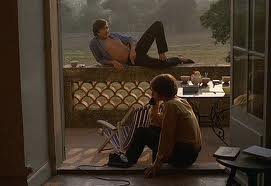 I somehow prefer the French title to the English Collector but any way, Le collectionneuse is another of the Contes Moraux of Rohmer's. I must admit that watching these movies has been a privilege and in many ways, I have remembered my own hypocrisy and self deception. I wish Rohmer had made many more moral tales. This movie intrigued me as much as it attracted me for here, the male characters are far more smug than in the other tales. The main character Adrien is on holiday at a friend's house in a 17th century villa in St Tropez. Sharing it with him is another friend called Daniel. Adrien is a middle man in the art collection business, he wants to set up his own gallery. Adrien is handsome and has a girl friend who refuses his invitation to go with him. Daniel is a painter and the two get along very well. We have all the ingredients of a Rohmer tale here, summer vacations, picturesque surroundings and the protagonists tendency to philosophize.
Adrien, as narrator, makes it very clear that he prefers inactivity to work and that his life is his work. He finds a perfect foil in Daniel in that the two don't even think of disturbing each other. Daniel seems to be the thinking type while Adrien is the thinking as well as the talking type. Daniel considers thinking as work too but Adrien prefers to read so that he doesn't think. Daniel however considers even reading to be work. Into this lazy world arises a disturbance in the firm of the attractive Haydee, a young woman who is also a friend of the villa owners. Haydee arouses Adrien's curiosity more than Daniel's, but for both of them, she seems a challenge. Haydee challenges them indirectly in that she seems to be with a new boy every day, who either pick her or drop off at the villa. The two men actually call her a slut, for it is clear that she challenges them sexually. Adrien wants Daniel to sleep with her but Daniel will have none of it. Adrien thinks that Haydee is going down the ladder as he sees her with a new boy every night though Haydee sees it as part of her search for something.
Adrien wants Daniel to sleep with Haydee and one day it does happen. Adrien then thinks that it happened because he had tested her and that they both did it because they wanted to test him. Everything that happens must involve Adrien even if remotely. Adrien later sets up Haydee with Sam, the art collector. Daniel dumps Haydee which Adrien observes with satisfaction and then approaches her to give her support which she rejects. Adrien wants in the end to sleep with Haydee which Haydee would not mind but Adrien believes that it is Haydee who wants that. Later, on their way to the villa, after Haydee has accidentally broken Sam's costly vase, they run into her friends who invite her to another town. Adrien waits in his car but because he is blocking traffic, he has to make way for another irate driver. In that incidence, he leaves Haydee behind. He thinks he has left her behind but he uses that as a factor of his will.
Of all the male characters in the moral tales, Adrien is not only the most handsome but the most smug. He attacks bourgeois life but he is a bourgeois himself. He knows he is good looking and thinks he can have the girl he wants and not who wants him. He is
 interested in making money but pretends he is interested in doing nothing. He prefers the company of others but believes he likes his own company. He uses others to test his own limits believing it is fair to do so. He is articulate and intelligent and has a beautiful smile. Some of his witticisms are brilliant like : "What I don't want is to think my own way. I want to be led". He is well read but pretends he is not. He has an anthropologist's approach towards people; he tells Haydee that he would not stroke a woman's legs if her nose was ugly. He knows he is a dandy but he is the philosophising dandy. His self absorbed attitude is attractive though he is extremely selfish too. He attributes to willpower what should be attributed to chance. On the whole, he is willing to surrender to Haydee in the end but he does not know that he had already done so.
Daniel is the most withdrawn of the three. He prefers solitude and self awareness. He is not as articulate on a daily basis as Adrien but he is arti
 culate spasmodically. He tends to speak when he wants to under a certain pressure. At one point he says : "People who are always thinking don't exist." Daniel is not willing to be an in Haydee's collection but eventually he ends up being just that. He shocks people merely for the value of shocking them. He is interesting in so far as he let's himself be. He is funny at times. He knows the games Adrien is playing but he couldn't care less. He prefers to be 'on a high' with himself. In the end, he is as self deceptive as Adrien. And as disappointing.
Haydee is not as articulate as other women of the moral tales. When she is introduced, she is walking along the sea shore, clad in a bikini. She lets her looks do the talking. She is pretty but not beautiful. Her smile is worth a million dollars though. She tends
 to reply insults with silence. She is seemingly dumb but she never let's you know what she is thinking about. She is impulsive and has no loyalties to any one apparently. She is disturbed underneath the promiscuity and she disturbs others randomly. She is quiet and well mannered but capricious and mysterious. Overall, she is not as wordly wise as the other two. She is an observer and soaks much and gives little. She is not the usual Rohmer talking woman.
Le Collectionneuse is a wonderful movie in many ways. It catches the sexy bohemian attitude of the main characters in an unforced unassuming manner. The way the villa is transformed by the attitudes of the three people and the sometimes visible tension between them is caught with subtle effect. The morning and siesta scenes are beautifully filmed and the conversations on the veranda or on the beach have the feel of 'real time' chats. One particular scene when Haydee and her 'boyfriend' have breakfast with Adrien and Daniel has impossible comic elements and charming wit and repartee. Here Adrien, on being asked what he does for work replies that he is an eye specialist, with such dead pan sincerity that the other two burst into laughter later, when Adrien tells Haydee's friend, who is wearing Polaroid sunglasses that polarization is already extrapolation. He advises him to wear Daniel magenta glasses which he, Adrien has prescribed. Basically Adrien and Daniel play the goat. One scene between Adrien and the art collector Sam, with Haydee observing them in silence turns vicious after Sam labels Adrien as a school child on vacation.
Waiting to unite with one woman while falling for the second one till you meet the first one is as much as basically happens here as in other morality tales but to sum it up like that is the way of a novice. Much more happens during the absence of the 'loved' one and the presence of the 'temptress'. I do not know if Rohmer has any sympathy for the male type though his female type emerges better.The performances by the three actors are convincing with only Patrick Bachau being a professional. I have read that Rohmer has been described as a conservative moralist because of his conclusions but that will be the aim of another post to consider. The camera work of Nestor Almendros in all of the morality tales is as important as the directorial role. The casual ordinariness of the images adds to the verbal grandeur of the dialogues.The colour schemes in this movie are refreshingly subtle, like water colour paintings done by an artist on drugs. Overall, Le Collectionneuse is a sexy movie that I will see again, and after that, again.
Sunday, December 19, 2010
Ugetsu
Ugetsu or Tales Of The Pale And Silvery Moon After The Rain is generally regarded as a ghost story and as a chronicle of war and the subsequent sufferings faced especially by women, but in the lines below, I will aim to describe it primarily as a love story. In three separate scenes, I will try to describe the intense and incomparable love between the main characters. This is not a plot description by any means.
The Lake Biwa Scene
It is no exaggeration to say that this scene has no rival in cinema. What we see first is a boat floating dreamily on a lake, towards us, and a lake shrouded in mist, the mist shrouded in wan and silvery moon light. A woman stands at the rear end, oaring this boat, and singing a song that arises seemingly from the depths of this lake. We see the boat glide on this most dreamy of lakes, as we recognise the men and woman huddled on it, as if tranced, held in the sway of the mist and moon light, tied to this boat by this most unearthly song, reminding them, if they can hear it, of the transience of all things. The boat and the lake may not exist at all, it seems we are in a trance, the remote viewer. Now, we see the boat from the rear end as it floats dreamily and as another boat emerges, as if out of the depths of this lake, out of this swooning mist, this moon light covered sensual mist.
Later, at dawn, when Miyagi looks at her husband in the departing boat, from the edges of this now real lake, Oh, Miyagi, you wanted to go with him, the desperation on her face, the camera cutting back and forth from the boat to Miyagi and back, that is the first intense depiction of love in this movie. The moon is in love with the lake, the mist with the lake, the boat with the water, and mortal men and women must do what they must do.
Lady Wasaka Dances
Lady Wasaka and Genjuro are in love. Genjuro holds a cup of Sake in his hands as Wasaka rises and, her face painted white, she drifts in front of him, she slides and writhes, she sings a song for her lover. This is no ordinary love for in her hands, haven't his pots attained perfection? "Your pots are saddened by my touch", she says, yes, this is no ordinary love, as Lady Wasaka dances and sings a song, the sound of which comes from another world. It sounds other worldly because this emotion is not of this world, she has suffered to attain Genjuro, now he is her's, as she dances a mournful dance, as she sings, "The finest silk, Of choicest hue, May change and fade away, As would my life, Beloved one, If thou shoulds't prove untrue." Love must necessarily seek suffering, sacrifice leads ultimately to the final gates of love opening like Wasaka's arms, as she holds her beloved.
Wasaka's eyes and her white face, her silken finery and her burning passion are not able to hide her fear that Genjuro, her only lover will one day leave her and that she will be all alone, with these pots and cups. Genjuro too loves her with the world weary love of men who are doomed to love immortal love, men whose eyes have seen eyes, whose faces have seen faces but this too is new for Genjuro, this awakening of the senses, this tragic numbing of the soul, this hypnotic movement of the limbs, Sake and mirth, Wasaka and love. This love is however immortal but Genjuro does not know that.
Genjuro returns
Miyagi waits in their tired hut for Genjuro. Love will pardon all, even greed. Have this stew, you are cold and tired, Miyagi says. Gone is her agitation and in its place is languid melancholy, had not their previous meeting raced against an hour glass, but this is new and you have returned home now, Miyagi knows. She looks at her lover with the known certainty of certainties, she alone knows that she must go, leave soon, perhaps forever, lover look at me, I will be gone soon, but she does not say that aloud. She has waited so long for him and he has travelled so long for her. Later, asleep, he dreams a dreamless sleep, safe sleep in the safety of being near the person who matters, and she has left him but so it seems. I will always be with you, Miyagi says and we hear. Genjuro hears that too. Near his pots and pans and outside his hut, he has erected a shrine for her.
The Lake Biwa Scene
It is no exaggeration to say that this scene has no rival in cinema. What we see first is a boat floating dreamily on a lake, towards us, and a lake shrouded in mist, the mist shrouded in wan and silvery moon light. A woman stands at the rear end, oaring this boat, and singing a song that arises seemingly from the depths of this lake. We see the boat glide on this most dreamy of lakes, as we recognise the men and woman huddled on it, as if tranced, held in the sway of the mist and moon light, tied to this boat by this most unearthly song, reminding them, if they can hear it, of the transience of all things. The boat and the lake may not exist at all, it seems we are in a trance, the remote viewer. Now, we see the boat from the rear end as it floats dreamily and as another boat emerges, as if out of the depths of this lake, out of this swooning mist, this moon light covered sensual mist.
Later, at dawn, when Miyagi looks at her husband in the departing boat, from the edges of this now real lake, Oh, Miyagi, you wanted to go with him, the desperation on her face, the camera cutting back and forth from the boat to Miyagi and back, that is the first intense depiction of love in this movie. The moon is in love with the lake, the mist with the lake, the boat with the water, and mortal men and women must do what they must do.
Lady Wasaka Dances
Lady Wasaka and Genjuro are in love. Genjuro holds a cup of Sake in his hands as Wasaka rises and, her face painted white, she drifts in front of him, she slides and writhes, she sings a song for her lover. This is no ordinary love for in her hands, haven't his pots attained perfection? "Your pots are saddened by my touch", she says, yes, this is no ordinary love, as Lady Wasaka dances and sings a song, the sound of which comes from another world. It sounds other worldly because this emotion is not of this world, she has suffered to attain Genjuro, now he is her's, as she dances a mournful dance, as she sings, "The finest silk, Of choicest hue, May change and fade away, As would my life, Beloved one, If thou shoulds't prove untrue." Love must necessarily seek suffering, sacrifice leads ultimately to the final gates of love opening like Wasaka's arms, as she holds her beloved.
Wasaka's eyes and her white face, her silken finery and her burning passion are not able to hide her fear that Genjuro, her only lover will one day leave her and that she will be all alone, with these pots and cups. Genjuro too loves her with the world weary love of men who are doomed to love immortal love, men whose eyes have seen eyes, whose faces have seen faces but this too is new for Genjuro, this awakening of the senses, this tragic numbing of the soul, this hypnotic movement of the limbs, Sake and mirth, Wasaka and love. This love is however immortal but Genjuro does not know that.
Genjuro returns
Miyagi waits in their tired hut for Genjuro. Love will pardon all, even greed. Have this stew, you are cold and tired, Miyagi says. Gone is her agitation and in its place is languid melancholy, had not their previous meeting raced against an hour glass, but this is new and you have returned home now, Miyagi knows. She looks at her lover with the known certainty of certainties, she alone knows that she must go, leave soon, perhaps forever, lover look at me, I will be gone soon, but she does not say that aloud. She has waited so long for him and he has travelled so long for her. Later, asleep, he dreams a dreamless sleep, safe sleep in the safety of being near the person who matters, and she has left him but so it seems. I will always be with you, Miyagi says and we hear. Genjuro hears that too. Near his pots and pans and outside his hut, he has erected a shrine for her.
Friday, December 17, 2010
My Night at Maud's

"There is here an infinity of an infinitely happy life to gain, a chance of gain against a finite number of chances of loss, and what you stake is finite. And so our proposition is of infinite force, when there is the finite to stake in a game where there are equal risks of gain and of loss, and the infinite to gain".
Rohmer's My night at Maud's is the third of his 'Contes Moraux' and as for as the talking style philosophizing goes, this is the best of the three I have seen so far. Jean-Louis is an engineer who has returned from overseas and is shown attending mass, a few days before Christmas. There, he spots a young blonde woman and on his way back, tells us that she will be his wife in the future. A chance encounter later sees Jean-Louis reunited with an old friend Vidal and the two soon start talking about chance and probability. Vidal reveals he is a Marxist while Jean-Louis confirms he is a Catholic. The two start discussing chance and Pascal's wager. Later still, Vidal invites Jean-Louis for dinner at his friend's Maud's place. Maud is divorcing and as Vidal declares, it will stop the two of them sleeping together out of boredom. Jean-Louis accepts.
Maud is a charming and exquisitely sensual, exquisitely attractive woman, who is disarmingly frank and brutally challenging to some of Jean-Louis's opinions, as the night moves on. Jean-Louis confirms that he follows a strict catholic moral code and that he would want his future wife to be a catholic and blonde, though the latter could be compromised. However, he also does admit that he has occasionally not been able to follow catholic morality. He lies about not knowing who the supposed blonde is he though he has only seen her. He declares that re-reading Pascal has done nothing for him for he finds Pascal's wager as not in the catholic spirit. When Maud asks him if he has morally compromised himself, he admits that he has but only when he has been single and not in a relationship. Soon they discover a snow storm has hit the town. Vidal decides to leave, leaving Jean-Louis behind, who accepts Maud's invitation to spend the night at her house, in her spare bed room.

Maud invites Jean-Louis to sleep next to him, atop the covers of her couch bed, which he rejects initially, settling on a sofa chair. But soon afterwards he gets up and settles next to Maud atop the covers. Previously Maud has declared that she sleeps naked during the night and true to her word, she does. Jean-Louis, however, stands by his moral code and doesn't give in to any temptation. Later in the morning, he feels a stirring of desire for Maud and on her responding, he stops himself. After that, he tries again but is rejected by Maud as she declares that "she likes men who know what they want." Jean-Louis later departs and becomes a good friend of Maud's and the two meet again. Their discussions continue to focus on their futures, especially if the two could be suitable for each other.Maud also tells Jean-Louis how her own marriage ended because of her husband's affair with a young blonde. Jean-Louis meets his blonde girl again by chance and declares his affection for her, asking her "do i have a chance to get to know you?" She is unhappy because of her own terminated love affair but seems quite receptive to Jean-Louis.
It is interesting to note that Jean-Louis is clearly attracted to Maud who also likes him. However, he accepts to spend the night with Maud while Maud only invites him to; he could have rejected that. Jean-Louis also adheres to his rigid moral stands but does cave in completely when he lies next to Maud. It is she who on rebuffing him, sends him to his usual catholic norms. Maud is not playing with him but testing him when Maud invites Jean-Louis to sleep next to him, which he rejects initially but accepts soon afterwards. Jean-Louis, in my opinion, could have left with Vidal and not stayed with Maud. After all, if the roads were treacherous for Jean-Louis, they were so for Vidal too. Jean-Louis actually believes in his standards, in his catholic values but does not think that he can be happy with Maud. However, on another meeting with her, he declares that only she can make him happy and that he feels happy only in her presence.

Maud is unhappy with her present situation but is not attracted to Jean-Louis' religious convictions. She openly tells him that he cannot convert her. While openly saying that she would be happy to marry him, she also thinks that it could possibly overwhelm Jean-Louis, who reminds her of a boy-scout figure.
It is interesting to see that once again, the main protagonist is either self- assured or self- absorbed. By putting temptation in his way, Rohmer is actually continuing a narrative of temptation being put in the way of someone who could be potentially tempted. In a sense, the temptress seems to be blamed more for tempting than the tempted. I am not sure if it is the product of a certain religious sensibility that has set the tone for such narratives down the ages or whether the female sex is sen as natural tempter. In that sense, the temptation or moral dilemma facing Jean-Louis is more concrete, in that he is lying next to Maud who is naked and perhaps willing; contrast this with Claire's Knee where the temptation is still inside the mind at a more nascent stage. From that point, I think the morality discussions are more subtle and psychological in Claire's Knee than here. Hence I preferred Claire's Knee to Maud, metaphorically speaking, though I would like to be in Maud's company.
There is perhaps a standard depiction of a femme fatale here in Maud in contrast to the blonde woman Jean-Louis finds in the church. It is difficult in a Pascalian sense for Jean-Louis to marry Maud because she is Maud; Maud is not ethereal and a believer as the blonde is. Maud is wise and wordly and fast, while the blonde is vulnerable looking and appears innocent. Maud is treated in a standard moral attitude and in that sense, I could only sense a male morality towards her. I do not know if all male morality is also a standard religious morality after all. When Jean-Louis discovers that his blonde wife is the same woman with whom Maud's husband had an affair, he declares to his wife that they are square, for the day he met her, he was with Maud. He does not tell his wife that he did not sleep with Maud but creates a situation where he actually lies to his wife, who responds that they should never talk about things past now.
Personally I found Jean-Louis as a hypocritical male agent, who has an idealized notion of womanhood and marriage, seeing things through a Catholic prism but actually doing the opposite. His wife must be Catholic and blonde, but he does not mind sleeping next to Maud, who has dark hair. While Maud is intelligent and understands Pascal more than Jean-Louis perhaps, Jean-Louis wants to settle with his blonde wife who appears that she may not understand Pascal. The last scene of the movie has Jean-Louis and his wife meet Maud on a beach by chance. Maud and Jean-Louis stop to have a chat, and Maud seems unsurprised that the blonde woman is his wife. He makes a reference to the evening they had spent together five years ago but Maud reminds him of the fact that it was a night.
Maud has remarried she tells him, but the marriage is not working out as she says that she has no luck with men. Maud then leaves as she walks away with Jean-Louis striding towards his wife and child. That is such a melancholic and bitter moment, it is actually a source of discomfiture for a sensitive person. Maud had liked Jean-Louis but he is not morally strong enough to be with her, I think she is intelligent enough to realize that. Jean-Louis had also liked Maud but he is shackled by his resolves; by not sleeping with Maud, he has won a wife but lost much more.
Regarding the setting, by now, we know that talk and philosophizing is the tone of Rohmer territory. This is black and white and winter, hence no summer grass or sunshine or placid lakes. The snow and the frost on the roads is captured beautifully. The camera focuses for minutes together on the speaking face, gathering all the inflections and nuances.. Francoise Fabian as Maud is lush with a burning sensuality. She is however able to transform into playful innocence ( as if sensuality is not innocent, too much Rohmer talk) in a moment's passing. Jean-Louis Trintignant draws the viewer in and he reveals himself very slowly. I was not however attracted to his persona as I was to Jerome in Claire's Knee. That speaks volumes about his performance which is brilliant. This movie has become one of my favourites and is nothing less than a masterpiece.
It is interesting to note that Pascal was born in Clermont, where the movie was shot.
Thursday, December 16, 2010
Claire's Knee

"There are things you hear and things you see, and the rest is supposition.”
As I stated in a previous post on Rohmer's movie style, talking and chatting are the essence of his 'thought' evocation, for essentially, Rohmer's world is where thinking begins and actions stop. Actions may still exist but they stem from thoughts, after thinking. In Claire's knee, as in his other movies, the main characters are away from their usual habitat and for various reasons on vacation. This time,, it is near the Swiss border on a picturesque lake. Jerome runs into possibly an old flame called Aurora, who is lodged with a family, as she is trying to finish a novel. Jerome is a career diplomat and has come there to sell his villa. So far, so good. Jerome is the kind of character that I immediately warmed to, for vague reasons really, not because he is fully bearded but perhaps because he seemed to have a lot of time on his hands, and appeared relaxed. Jerome informs Aurora, whom he has last seen in Bucharest that he is getting married to a woman called Lucinde.
Aurora introduces Jerome to a young girl called Laura, who is the daughter of her landlady. Later, Aurora, herself not unattractive, informs Jerome that Laura may be in love with him. Jerome finds that amusing but at Aurora's insistence, decides to play a game so that Aurora can use what happens as material for her novel. He laughingly assumes the role of a guinea pig for her, as he claims. Laura clearly seems enamoured of Jerome and it is clear that she is looking for father figure, as she herself declares. On a hiking trip alone with Jerome, Jerome kisses her but Laura stops him, saying that she wants more than friendship. Later, Jerome claims he will not play the guinea pig for Aurora. Soon after, Claire, Laura's half- sister arrives and to his own dismay, Jerome falls for her. Claire is young like Laura and whilst picking pears on a ladder, Jerome seems to get attracted by her knee. Soon afterwards, Jerome declares to Aurora that usually possession leads to desire for him but in this case, desire is asking for possession.
Initially Jerome, in his numerous chats with Aurora and Laura declares that he has found in his fiancee Lucinde, the woman with whom he is never bored. While he might still be attracted to other women, it is only with Lucinde that he feels fulfilled. But in his first meeting with Aurora, he declares "Why would I tie myself to one woman if I were interested in others?”, though later on he is clear that Lucinde is really made for him. During a chat with Laura, he shows her Lucinde's photo and admits that she is not his type physically but immediately says that “Though I don’t really have a type. Looks don’t matter to me. It’s the character alone that counts". However later, he declares his passion for Claire, who is long legged and pretty. He admits that Claire is not his type. In Laura he finds a girl who challenges his opinions, especially about character and in Aurora, he finds a kindly ear.
In his desire for Claire's knee, he makes it clear that were she to throw herself at his feet, he would disregard her but that only in possessing her knee would he feel that he had liberated himself from exploring this desire. Much earlier Jerome declares that life is too short to notice adolescent yearnings but he does notice Laura's yearnings acutely. Jerome tells Aurora that any woman can be approached through either a caress on the neck or arm or a kiss on the cheek but in Claire's case, it is her knee. When he does finally get his opportunity, he fondles and strokes her knee and Claire lets him do it. It is an intriguing scene, not only for the two of them but for the viewer too, and one wonders where Jerome will stop or how Claire will react.
Claire's knee is a magnificent movie and in this vacation spot, the main characters meet, have tea, walk, are on a boat, inside a house, indoors and outdoors, talking and walking, chatting and getting angry at each other, compromising and philosophizing. In essence, one or two Rohmer characters in all his movies are the philosophizing type. They are not philosophers but the talking type, those who talk about things when they are actually talking about themselves, who give examples of things
 when they are actually speaking from their own experiences. That they contradict themselves from time to time is evident but more importantly, they seem to at least outwardly arrive at some outer conclusion.
Jerome is a brilliant example of the talking type. Sitting or standing, dressed casually and hatted, Jerome is the quintessence of the moralizing type. He never ceases to give an opinion or reflect from his past experiences. He always or usually has something to say or advise. He advises Laura to study in Paris or Lyon and advises Claire to keep away from loutish boys. He knows he is always away from making a mistake but admits that it is possible to do so. He never seems to be in a rush or hurry. He is generally polite and very lazy in his demeanour. Jerome is also a bit of a hypocrite and seems to justify his own lapses. He never admits that he is completely wrong and always justifies his weakness or some behaviour with a theory. His explanation of his desire for Claire's knee is nothing short of a psychological formulation but actually quite misleading.
The other characters are brilliantly portrayed by all the actors including Laura, who is simply scintillating. She is the Rohmer woman par excellence, very wise and maturing with experience, while Aurora is already worldly and wise. The locales are as in other Rohmer movies, sun and shade and naturalness are important ingredients. The moody analysis of desire and its undercurrents are discussed against a background of summer grass and pear trees and motor boat cruises on placid lakes. I think Claire's Knee is such a subtle and important movie that I must see it many times before I can actually appreciate the intense psychological implications that are more hidden than visible.
Subscribe to:
Posts (Atom)